Tuesday, 6 July 2021

DEEP PURPLE PI musings – how a bunch of cryo-minions study ice darkening (or are we mad to put 27 people in a tent camp on the Greenland Ice Sheet in 2021?)

 by Liane G. Benning

As one of 3 @DeepPurpleERCSy PI’s I can only say that I am extremely glad that the summer 2021 DEEP PURPLE field season has finally started! 

In 2020 we had 7-8 people in camp and did some great science. We knew that in 2021 we would hire a whole slew of new ECR’s, who will shape the science focus for the rest of the DEEP PURPLE grant duration. We also hoped that maybe humanity would behave and COVID would not still be with us in the summer of 2021, but hope is a good thing.

Nevertheless, in October 2020 we decided to have a ‘bigger, stronger and more ambitious’ summer 2021 season. Deluded, I know, but we wanted to let a large team of eager scientists loose to test our hypotheses and fulfil the science dreams for which @Alex, @Martyn and I (@Liane) were awarded the @ERC Synergy grant DEEP PURPLE.  

Below some of my thoughts of how a bunch of DEEP PURPLE ‘minions’ planned and organised a massive summer field season. 

Looking back, I often wondered what made us believe that it would be a good and feasible  idea? The answer is actually rather simple!  We had no choice! 

We hired a fantastic and highly diverse group of ECRs from all over the world and each and every one of them came up with brilliant fieldwork plans to address various aspects of our research questions … so we simply had no choice. We had to do it !!

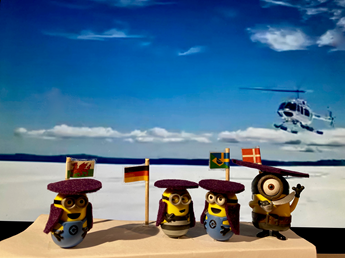
Figure 1 DEEP PURPLE ‘minion’ PIs: (from left to right) our supreme Welsh primo leader Martyn Tranter, the unashamedly European, yet of German descent puzzle master Liane G Benning, the Brazilian/Swedish superstar Alexandre Anesio and our Danish, sword wielding camp master Lasse Twiggs Degn in the appropriate DEEP PURPLE PI attire

Figure 2 The multinational and diverse DEEP PURPLE ESR and PI team are ready to get going for the 2021 field season in Greenland!!

We started with plan A, changed that to plans B, C, D ….. and after ~ 8 months of discussion and changes we are now at plan Q or so. We all know that once on the ice the conditions will force us into plan Z+++++, but we are all prepared for that (well almost all !).

So how did we manage to pull it off? 

Well, we have not yet, but DEEP PURPLE team 1a (of 5 teams) is already in Greenland and team 1b just departed Copenhagen airport. Teams 2, 3, 4 and 5… will follow in 5,10…etc days.  

Part of the DEEP PURPLE team 1 did a reconnaissance flight yesterday to establish base camp location and to test field communications.

Figure 3 (a) Reconnaissance flight was used to establish base camp location for DEEP PURPLE 2021, test drone and communications via Garmin and Satellite phone - all worked and we are ready to go (map sent as text via Garmin by @Rey Mourot)

Figure 3 (b) Selfie of the reconnaissance crew (Joe Cook, Martyn Tranter, Eva Doting, Rey Mourot and Pilu (pilot from https://www.sermeqhelicopters.gl/) at the DEEP PURPLE 2021 field base camp enjoying the sunshine and assessing conditions for deployment. (photo copyright @Rey Mourot)

Figure 3 (c) Drone image of DEEP PURPLE base camp area in S Greenland; note helicopter at bottom left side for scale (photo provided by @Joe Cook)

So what did it take to make this happen? Here some of my thoughts. I am sure Martyn, Alex, Lasse and the whole team have their own stories.

It all started in our weekly DEEP PURPLE PI discussions. We first agreed on the maximum number of people to have in camp at one time; we started with maximum of 10 people, raised it to 12 … and ended up with maximum 16 people in camp, a total duration of the field season from door to door of 50 days and a total of ~ 570 people days in camp. Let the science rule!!. 

With such a big and complex camp, there were many possibilities of how to achieve / manage this, giving everyone enough time to fulfil their science objectives, while remaining within the camp size limits and allowing for changes due to weather etc etc. Planning such a camp needed several puzzles to be solved simultaneously, some of which are briefly shown below. Luckily, having a somewhat anal but organised puzzle-loving German among the PI’s was not a bad thing (the alternative would have been a Welsh or Brazilian ‘organised’ camp!)

So, in early 2021, I started assembling a constantly changing plan and after many, many, many, many, permutations / discussions / changes the current plan foresees 6 consecutive, yet overlapping teams, who will spend a total of ~ 570 people-days in camp.

Figure 4 How to put 27 people in a DEEP PURPLE camp for field work, while not surpassing 16 in camp but giving all the needed on-ice time for the research (Liane G Benning, puzzle no  1 version xx)

To do our work on the ice, we will have 4 lab tents filled with loads of loads of science gear from microscopes to drones and from pumps to pH meters, cryp-shippers etc. etc. (~ 90 boxes and cases worth of it). All this will be powered by a big solar array and two wind turbines. We also thought hard about the fact that our ~570 days on ice also equates to ~ 570 ‘crap’ days on the ice, so our Teams WikiCrapia channel had some – to say the least – interesting suggestions/discussions on this subject.  

Figure 5  To allow all our DEEP PURPLE samples to be preserved well we came up with a rotating cryo-shipper schedule (Liane G Benning, puzzle  no 2 version xx)

Finally, in camp, each team member will sleep in their individual tent, but we will all cook and eat together in a large mess tent in which we will consume ~1000 kg of food. To make the camp run smoothly, besides tent relocations, day-to-day logistics and keeping power going etc., we also have a camp ‘chores’ rota with daily-designated duties for everyone from preparing breakfast or dinner, washing dishes, fetching water and all the way to the dreaded ‘crap’ job!  Ignoring or not doing ones scheduled chores results in automatic assignment of additional ‘toilet-cleaning’ duties! Thus I am sure everyone will do their duties 😉.

Figure 6 DEEP PURPLE summer 2021 camp chores schedule (Liane G Benning, puzzle no 3 version xx)

Only fair play and teamwork will make our camp plans possible, but with this excellent team of people we, the PIs, will be able to just sit back, relax and enjoy camp life in the sun with a nice whiskey or gin and tonic while the camp runs itself like a dream and the science happens 😀 

Many more details about how we managed to get here and how we pulled it off once on the ice will come via further blog posts on the DEEP PURPLE website (see already the brilliant RISO ECR preparation blog).  Thus, stay tuned and follow us on Twitter.

Tuesday, 29 June 2021

Fieldwork preparations

By Lou, Marie, Shunan and Ate 
 

Over the last months, we have been busy preparing for this year’s fieldwork, and with that our activities shifted from science to more practical things. Practical things that might be less fun, but certainly not less important than the science we need to do in the field! 


The chance of us meeting a polar bear is very slim, but to prepare for the unlikely the event of one visiting our camp, we needed to complete a rifle training. We had a first theory course during which we learned about analyzing a polar bear's attitude and the subsequent behavior we should have towards the bear. In most cases, polar bears can be scared away and they do not need to be shot. However, it can happen that they are really hungry or protecting their cubs so they adopt an aggressive behavior, and this is why we got a second practical training. We arrived on the shooting range where six printed polar bears were staring back at us. We all learned how to securely manipulate the rifle (always directing at the targets or up in the air), how to load and unload the rifle (Greenlandic half-loading specifically) and how to shoot in different positions from 25 and 50 meters. We all had a really different experience with this shooting training, but we all had in mind that we were about to use highly dangerous tools that hopefully we would not need to use in real life. The shooting range was itself quite impressive, as it is an isolated place with constant shooting noises, and so were the guns as they make noise, they are heavy, and recoil upon firing. The instructor then put us in a stress-situation, where we had to run to the car parking and back and shoot as quickly as possible. Some guns had been sabotaged by the instructor who wanted to test our ability to stay calm, and we all managed to hit the target in time. In the end of the day we left 6 incapacitated polar bear posters behind, and brought home some nervously and emotionally exhausted PhD students. 


We then had first aid training, focusing on the Arctic as it is an isolated place with specificities, e.g. it is impossible to call 112 in case of someone feeling bad there. It was more relaxed than the previous training and nice to try to give CPR to the “little Anne” doll. It was surprising how deep you actually have to press for it to work! And it was a reassuring and empowering experience for all of us that we all know how to perform first aid.


Many hours of work involved getting all of our stuff – which was a surprisingly a huge amount – from the UK and Germany to Denmark and onwards to Greenland. Most of us made daily trips to the basement where more and more packages arrived every day. Steadily our offices became a warehouse filled with cardboard boxes and bubble wrap which were then replaced by plastic boxes as we repacked all of it to fit onto the pallets to then go in a container. 

Eventually the actual warehouse was mostly occupied with Deep Purple materials… Pallet after pallet of consumables, tents, sleeping bags, camping gear, food. Speaking of food, a combined effort made sure that we got some of the most important items included in our inventory. Without (real) coffee, parmigiano, chocolate, etc., certain colleagues just wouldn’t function on the ice. 


More practical jobs followed, like modifying tents, weighing all boxes, packing all boxes on pallets, moving pallets, re-packing them again. Most of us became very proficient with moving pallets around, and the warehouse looked more like a game of tetris. In fact, some of us started dreaming about pallet positions… Two of us also went on a road trip to Aalborg with a van full of chemicals (made it just in time for the boat!). Last but not least, lab tents arrived that had to be set up as a test. After weekends and evenings spent, a full shipping container was finally ready in time to go to Greenland.

In parallel to the packaging tasks is the drone experiment conducted by Ate and Shunan with the help of Lasse. The drone is a DJI M600 Pro and has a payload of 6 kg and will carry the hyperspectral camera on it. The test consisted of several steps. First we practiced our skills in drone simulator. After crashing enough simulated drones, we finally came to the stage of flying the real one. We tested the both the manual and autopilot flight mode. We designed one flight mission to draw a “DP” on the map. Having got the flying part ready, we mounted the gimbal stabilizer on the drone. It will help stabilize the onboard instrument while flying. Eventually the drone is equipped with a hyperspectral camera and a LiDAR onboard. 


We could almost forget that there are still experiments to do, so after the container left for shipping, it was back to polishing protocols, last-minute ordering and waiting anxiously for the last things to arrive. Departure is now fast approaching. Some think there’s too little time, while at the same time it cannot happen soon enough. The massive operation that needed so much preparation is now becoming real! Which still feels a bit unreal. And we’re all looking forward to meet each other on the ice after many online meetings across borders. In the end it was very hyggelig to work long hours in the warehouse together, and we will definitely keep up this work spirit on the ice!

Tuesday, 4 May 2021

Introduction to the Mineral-Microbe-Interface team

The Mineral-Microbe-Interface (or "MMI") team, made up of seven early career scientists and led by Liane G. Benning, are based at the German Research Centre for Geosciences, GFZ, in Potsdam, Germany. Their research goal this summer is to assess the compositions, fluxes, rates and interactions between of all types of light absorbing particulates (microbes, minerals, black carbon). The team will focus on assessing variations in carbon and other crucial element cycles with a particular focus on the role of pigmented snow and ice algae. By combining molecular microbiological / organic geochemical and mineralogical sampling and analyses our quest is to elucidate how microbe-mineral-interface reactions are affected by delivery/on-ice processing/retention or downstream removal during melting and during overwintering.

Chris Trivedi, PhD (Postdoc)


Chris' research interests include using sequencing technologies and bioinformatics to better understand the role that microorganisms play in glacial melt dynamics. In particular, for fieldwork in 2021, he will focus on potential seasonal changes in snow/ice algae via changes in pigment and EPS production using metagenomic and metatranscriptomic sequencing, paired with metabolomics. Additionally, he is interested in the role bacteria play in conjunction with the algae and what mutualistic relationships may exist between the two domains.
 
Stefanie Lutz, PhD (Postdoc)

 
Steffi's research focuses on the microbial diversity and functions of glacial surfaces. In particular, she is interested in the role of cryophilic algae in these ecosystems. Her goal is to get a better understanding of their distribution, as well as their genetic and metabolic inventory that allows them to thrive in these extreme environments. This will be accomplished by using various 'omics' techniques and bioinformatics. 
 
Elisa Katharina Peter (PhD student)

 
Elisa is interested in the metabolic fingerprint and adaptation of glacial microorganisms, and the factors allowing them to survive and thrive in such extreme environments. Her focus is on determining metabolic triggers and controls of pigment formation in the snow and ice algae that cause darkening and increased melting  of the Greenland Ice Sheet. Using a combination of various high resolution mass spectrometric techniques, Elisa targets the variations in primary and secondary algal metabolites and how these change as a function of diurnal and seasonal bloom developments.
 
Rey Mourot (PhD Student)

 
"How do micro-organisms survive in extreme environments?" is one of the questions motivating Rey's scientific interest. As part of the DEEP PURPLE project, their research focuses on glacial microbial communities to better understand how mutualistic interactions could help organisms to survive through the arctic winter, when temperatures, light conditions and the lack of liquid water represent a major stress. With this focus, they are using computed tomography and microscopy techniques for visualising the arrangement of minerals and micro-organisms in ice core, coupled with various 'omics' studies of snow and ice. 
 
Pamela E. Rossel, PhD (Postdoc)


Pamela is captivated by the molecular messages encoded in complex organic mixtures. Her studies cover a wide range of environments, going from hot hydrothermal systems to cold sediments from the deep Arctic Ocean. Using ultrahigh resolution mass spectrometry, she deciphers these molecular messages to better understand the source and fate of organic carbon species. In the DEEP PURPLE project, she will evaluate microbial carbon dynamics in ice/snow algae dominated systems, with the focus on how particulate and dissolved organic matter are produced, degraded, preserved, and potentially exported.
 
Helene Hoffmann, PhD (incoming Postdoc)


Helene is a specialist in chemical and physical techniques to decipher past atmospheric conditions in Alpine and polar ice samples. After a Physics PhD she spent fourteen months in Antarctica as part of the 38th overwintering team at the German research base Neumayer III taking care of the Air Chemistry Observatory. Now she is a postdoc at the University of Cambridge studying paleoclimate proxies in Antarctica as part of the WACSWAIN (Warm Stability of the West Antarctic ice sheet in the last Interglacial) project. In her 1st Deep Purple summer season she will focus on the origin and fate of the dry and wet deposited particulates deposited onto the Greenland ice sheet and their interactions with the microorganisms during blooms.
 
Helen Feord (incoming postdoc) 
 
Helen is currently finishing her PhD at the University of Edinburgh, studying the cellular mechanisms responsible for the daily rhythms of intracellular ion concentrations in a model green alga. Her research examined endogenous circadian rhythms, to understand how eukaryotic cells self-regulate energy availability and use throughout the 24 hours of the day. Building on this project, she is interested in studying biological rhythms and cellular homeostasis in an ecological context, and, in particular, how algal species adapt to stressful and changing conditions. Helen will join DEEP PURPLE as a postdoc to study function of eukaryotic algae present on the Greenland ice sheet. She will study diurnal and seasonal changes in algal community composition and gene expression as well as algal responses to various abiotic stressors. She hopes this will give us a better understanding of how these species both respond to and anticipate dynamic environmental change. 
 
Some highlights from 2019 and 2020.

Our team at the snow/ice interface on Mittivikatt glacier in 2019. Photo: Laura Halbach.
 

The top of the ice core is full of dark material that consists of minerals and many many ice algae that change the watering crust (top-left). Rey Mourot and Martyn Tranter digging a snow pit at QAS-U in 2020 (top-right). At 2 am the sun almost sets in the camp (bottom-left). Photos: Liane G Benning. GrIS 2020 camp as seen from drone (bottom-right). Photo: Rey Mourot.  
 

Friday, 5 March 2021

Introduction to the 'Weathering Crust' team

The weathering crust (or "WC") team, led by Prof Martyn Tranter, are based at Aarhus University and are responsible for measuring, monitoring and modelling ice surface change. This includes all processes that affect the albedo (brightness) of the surface and control how rapidly the ice melts. Of particular importance are the changing architecture of the surface “weathering crust” – a thin porous layer that forms seasonally across the Greenland Ice Sheet’s melting zone, the accumulation of light-absorbing glacier algae, and the drainage of melt water towards the sea. These processes are interlinked in complex ways and determine the contribution of the ice sheet to global sea levels. The team is currently made up of four researchers:

 Dr Joseph Cook (Senior Researcher)

Joseph is responsible for the overall work package strategy and has particular expertise in albedo measurement and modelling. He has developed the BioSNICAR models for calculating the albedo-reducing effects of glacier algae and published extensively on the interactions between biological and  physical processes on ice surfaces. His field work experience includes >15 on-ice camps in Greenland in all seasons and he has explored deep beneath the ice sheet surface in a series of ice caving expeditions.

Shunan Feng (PhD student)

Shunan is interested in understanding the process and climate response of earth surface, particularly time series analysis by combining in-situ measurements, remote sensing and other geospatial data. This had led him to focus on remote sensing during his bachelor study and specialize in glaciology during master study in Uppsala University. He also worked as remote sensing associate in the International Committee of the Red Cross. His role in Deep Purple will be trying to monitor the variability of the albedo and biogeoprocessing of rotting ice surfaces in the Dark Zone of the Greenland Ice Sheet at different scales. The understanding of the albedo evolution of the GrIS will require unprecedented spatial, spectral and temporal resolution datasets from the ground and the air, new techniques for bridging across spatial scales and advanced analytical techniques for spatiotemporal changes. Novel algorithms of albedo calculation, methods of spectral analysis in detecting, classifying the glacier algae and estimating the pigment concentration etc. will be experimented to link the variation of albedo with glacier algae growth. We will try to bridge the gap between field measurement, UAV, and various satellite platform and upscale the optimized methods to large area.

Lou Chevrollier (PhD student)


Lou studied energy and environmental engineering in France before finding her way into natural sciences. She is interested in micro scale processes and before joining the DP project, she has been working with plankton and metal pollution combining modelling and field-oriented methods. She is also fascinated by light interactions, from the diffraction patterns on butterfly wings to the atmospheric particle scattering coloring the sky in blue and the high reflectivity of cryospheric surfaces, blinding us when hiking in mountains. In the WC group, she will be looking into the small scale processes driving albedo variability, trying to disentangle the role of the different light absorption particles (LAPs) and weathered crust dynamics in the darkening, combining field measurements and modelling experiments. In particular, she will work on refining numerical models to better reproduce and understand the role of glacier algae among the other light absorbing particles and within the changing ice structure.

Dr Ian Stevens (Postdoc)

Ian completed his PhD exploring the eco-hydrology of glacial surfaces at Aberystwyth University, studying the physical parameters of the near-surface weathering crust and the microbial abundance of surface meltwaters at field sites across the Northern Hemisphere from the high Arctic to the European Alps. His research interest focuses on elucidating hydrological processes within the weathering crust, exploring water, particulate and microbial fluxes through this aquifer to the channelised supraglacial hydrological system. To achieve this goals, Ian has a passion for method development, including designing and building custom sensors to measure previously unrecorded parameters. Ian’s role in DEEP PURPLE will be to continue to obtain empirical measurements of the weathering crust, informing modelling and upscaling approaches, and enabling assessment the provision of water to ice-surface algae.

Wednesday, 2 December 2020

Team member introduction: Ate

By Ate Jaarsma

I’m Ate, one of the newer additions of the Deep Purple team. Since I started recently, I thought I would introduce myself a bit. In the beginning of this year I graduated from the University of Groningen in The Netherlands, where I got my background in molecular biology. During my master I have mostly been busy with microbiology, in particular competition between bacteria. In my research projects I worked with engineering of antimicrobial peptides, and Contact-Dependent Inhibition (during a stay at Uppsala University). I’m happy to continue this line of work now at Aarhus University as part of the Deep Purple project. In a nutshell, I am looking into the chemical warfare that takes place between microbes living on the Greenland Ice Sheet in their fight for food and space.

Still, the Deep Purple project is very inter-disciplinary and because of that, the field was a bit new to me. The last three months I have been reading a lot, and I found out how much I didn´t know… But a plan for me to work on the coming years is now in place! This has all been made possible in part by incredibly helpful colleagues and Danes in general, who made the move to Denmark really easy. The transition to a new country has been smooth so I felt settled quickly, allowing me to focus on the science. Most of all, it’s wonderful to be back at work. This summer, my productivity was a bit limited to growing vegetables, building an insect hotel, painting (not in the art-sense), and drawing (in the art-sense). So it is amazing to also do science again, most importantly in a real lab with real colleagues around. Something I certainly missed during the past lock-down. Starting a PhD is a dream come true, which still feels unreal now and then when I’m biking along the beautiful Roskilde Fjord to work in the morning… I´m excited for what is to come!